Only out an hour
Blinn and Lambert
FEB 20, 2026 - APRIL 11, 2026
Additional programming:
Conversation between the artists and Matt Stromberg
Saturday April 11 at 5:30PM
Followed by drinks and food
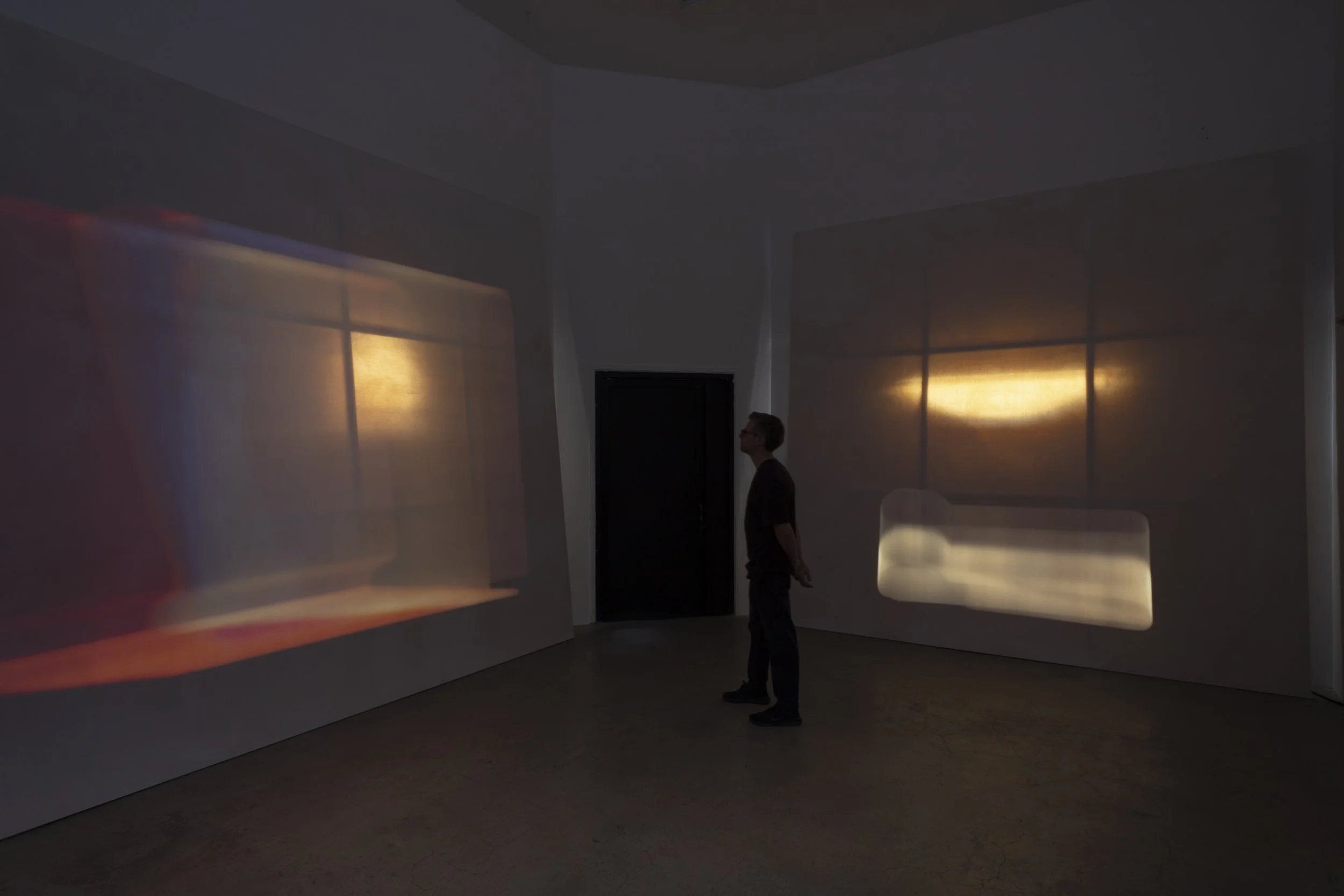
IZZY LEE (Los Angeles, CA) is thrilled to present the Los Angeles debut of New York–based collaborative duo Blinn and Lambert, featuring their new site-specific installation Only out an hour. Incorporating canvas and 35mm projections, the exhibition reflects the artists’ shared background in painting and expanded practice across moving image, optics, and projected light. Only out an hour will be on view at 508 Chung King Road through April 4.
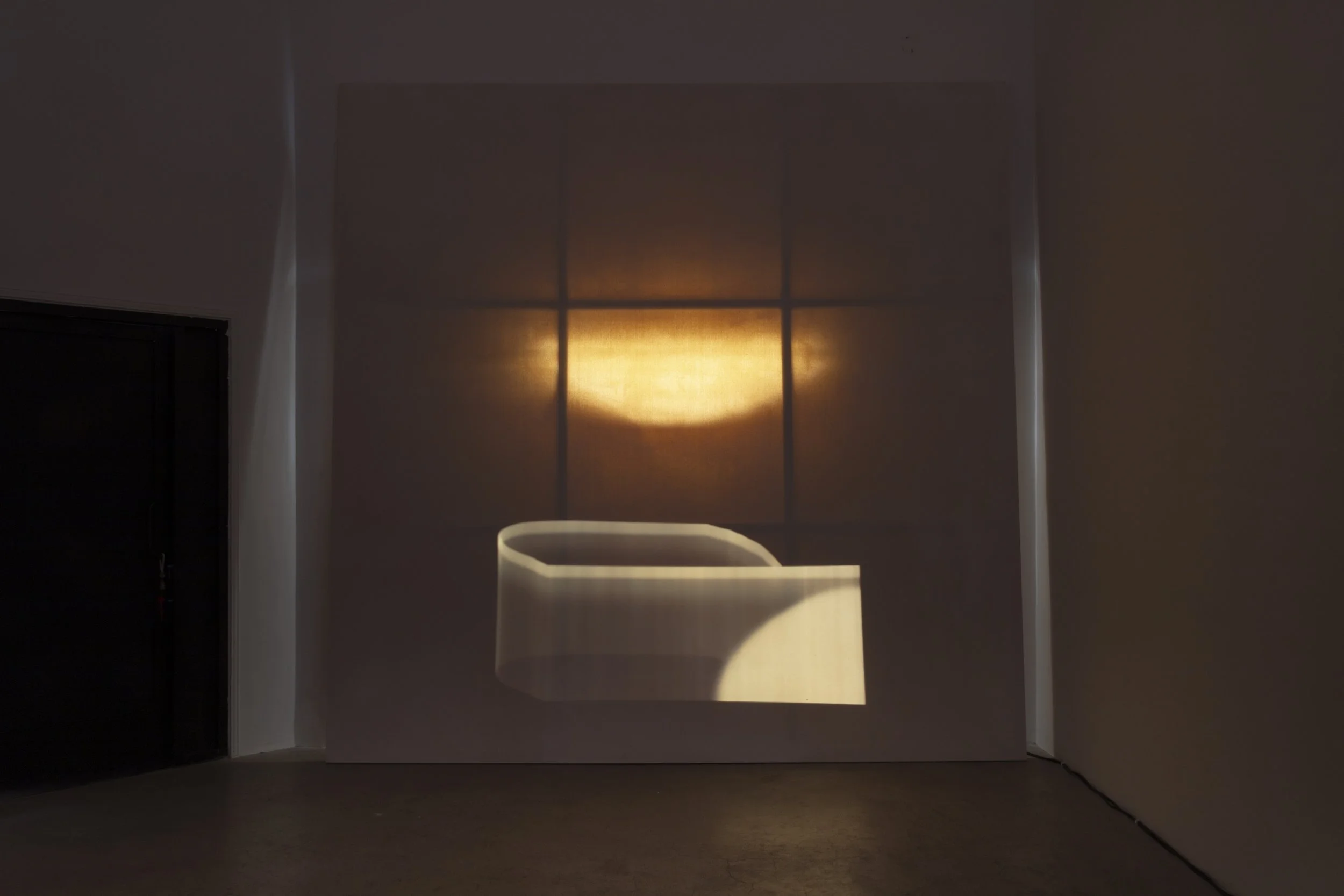
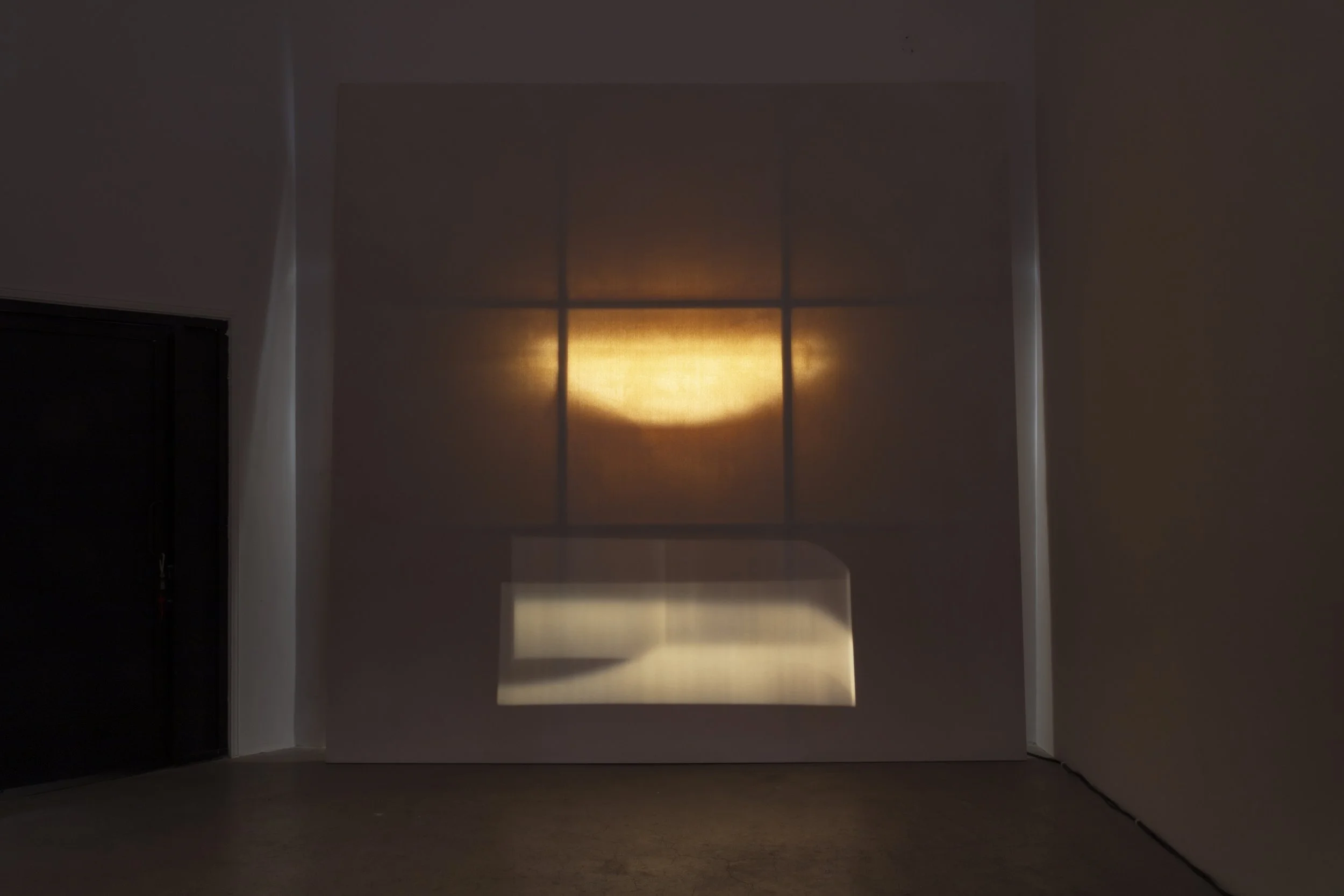
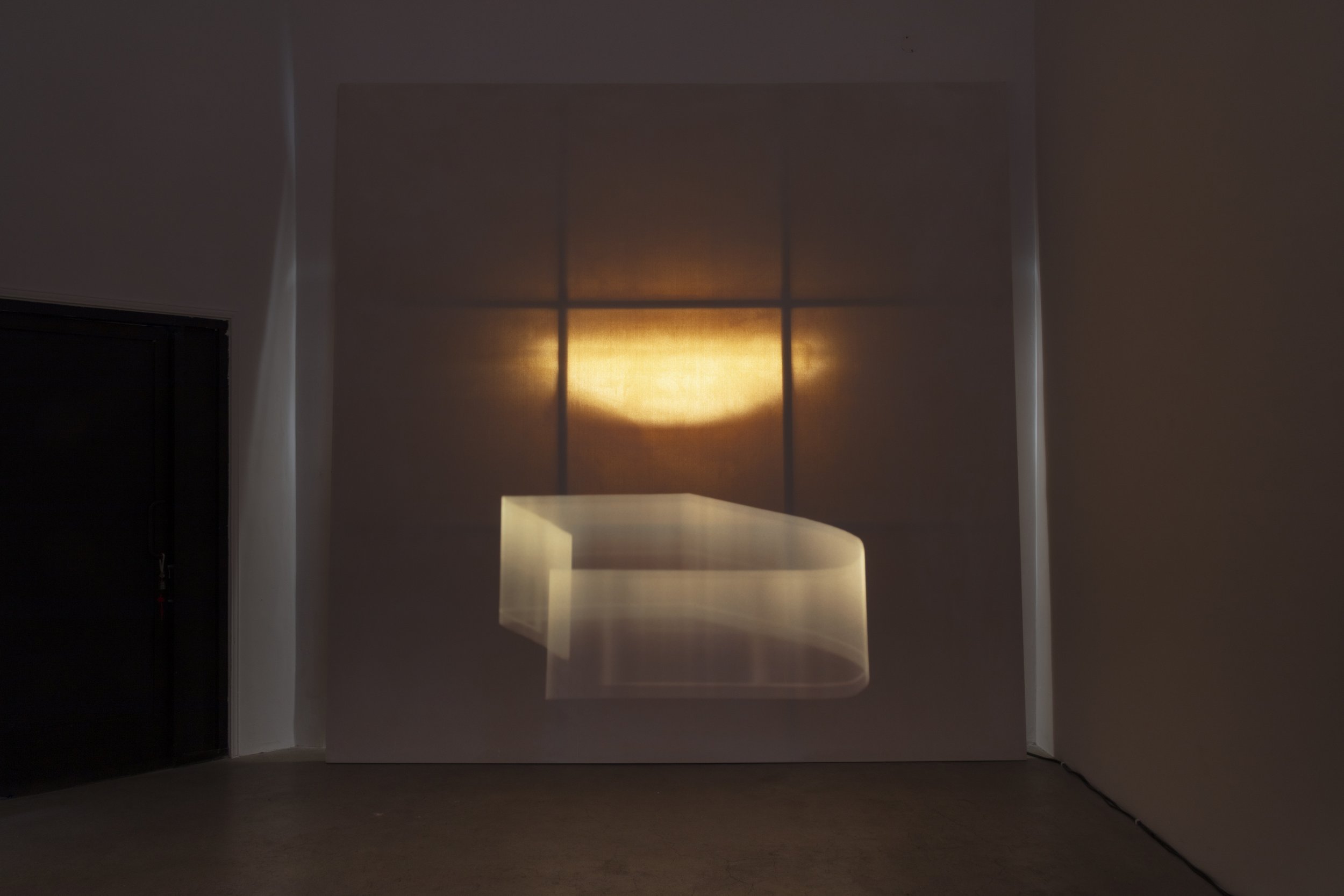
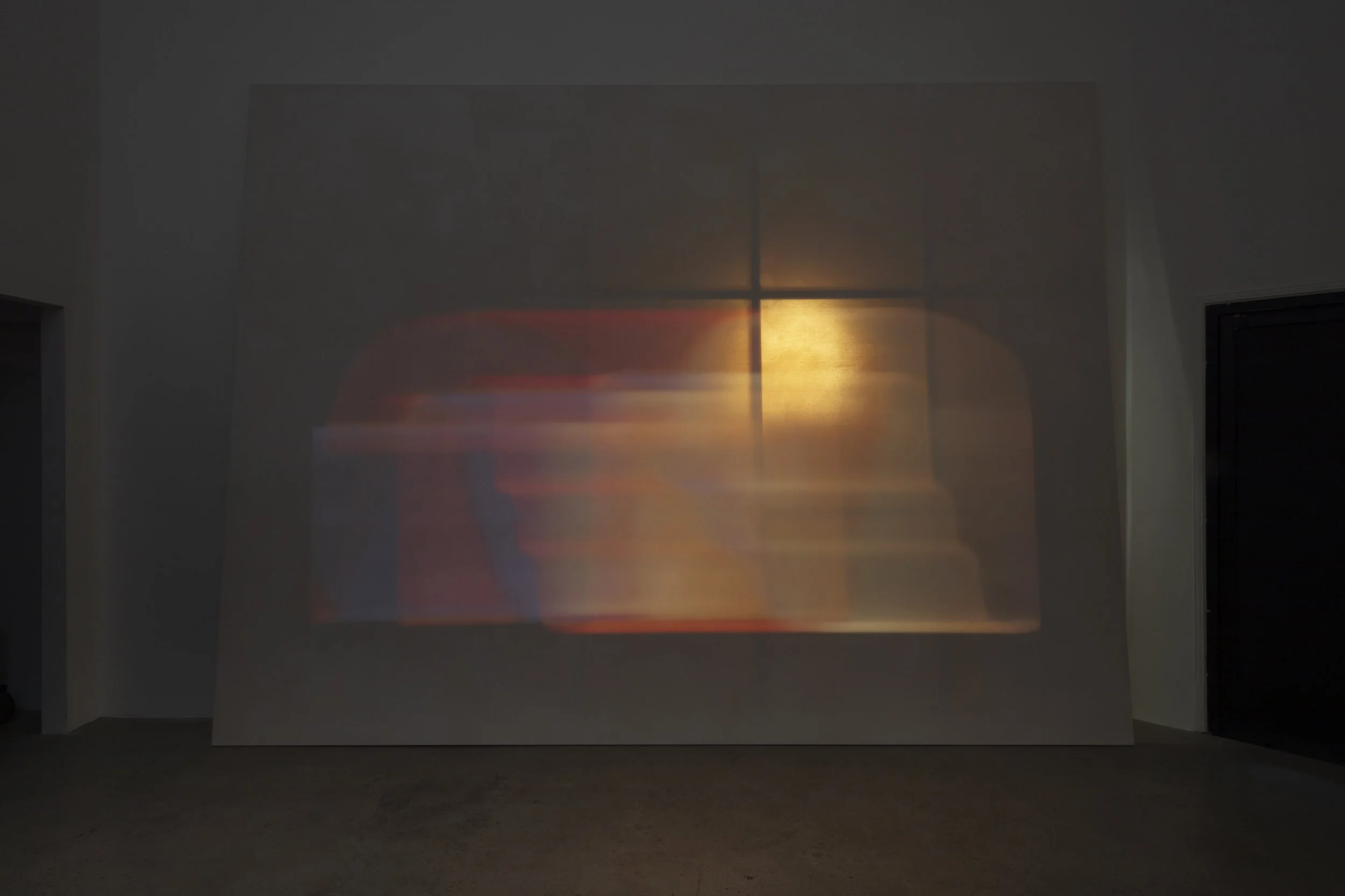
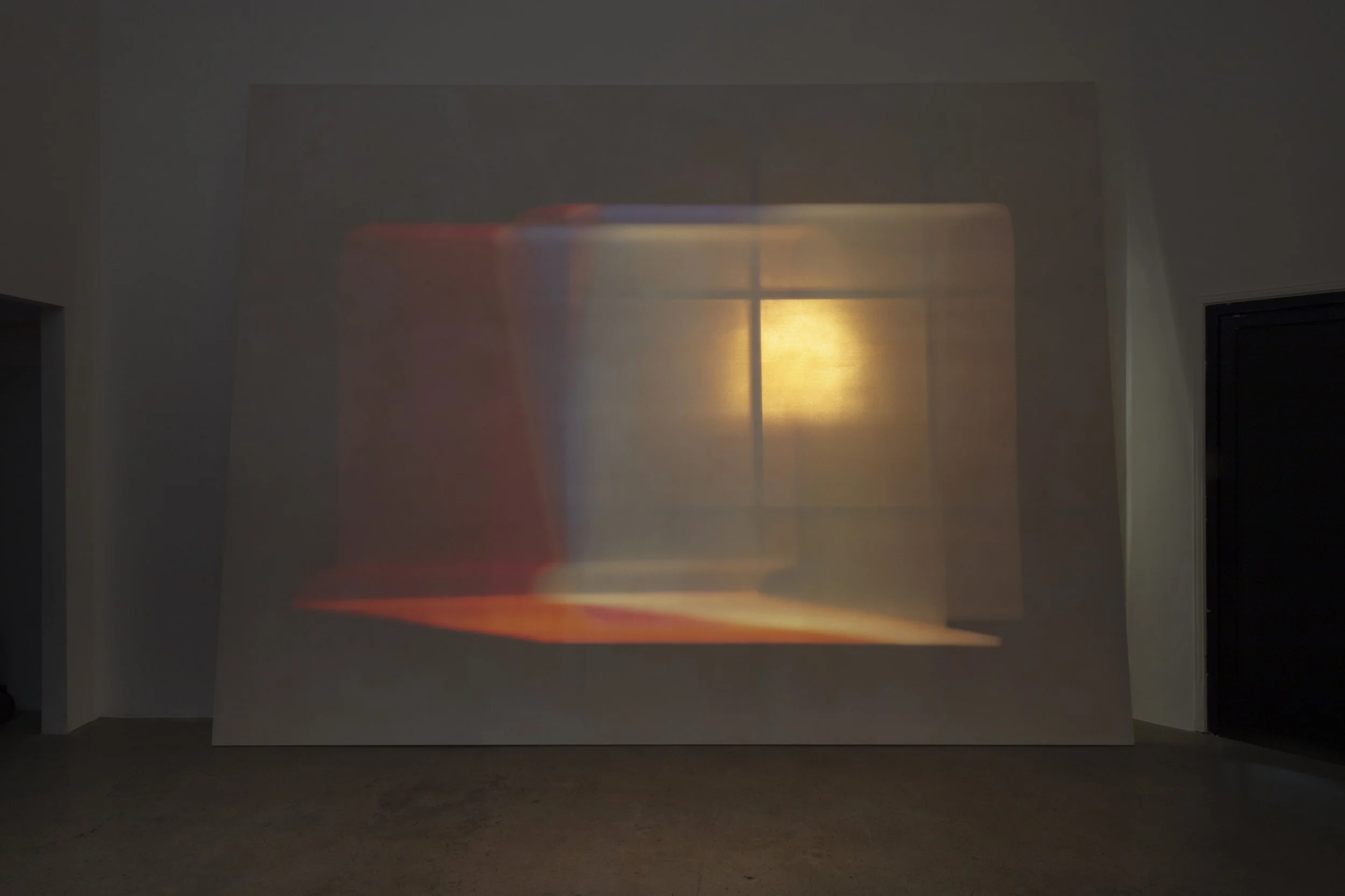
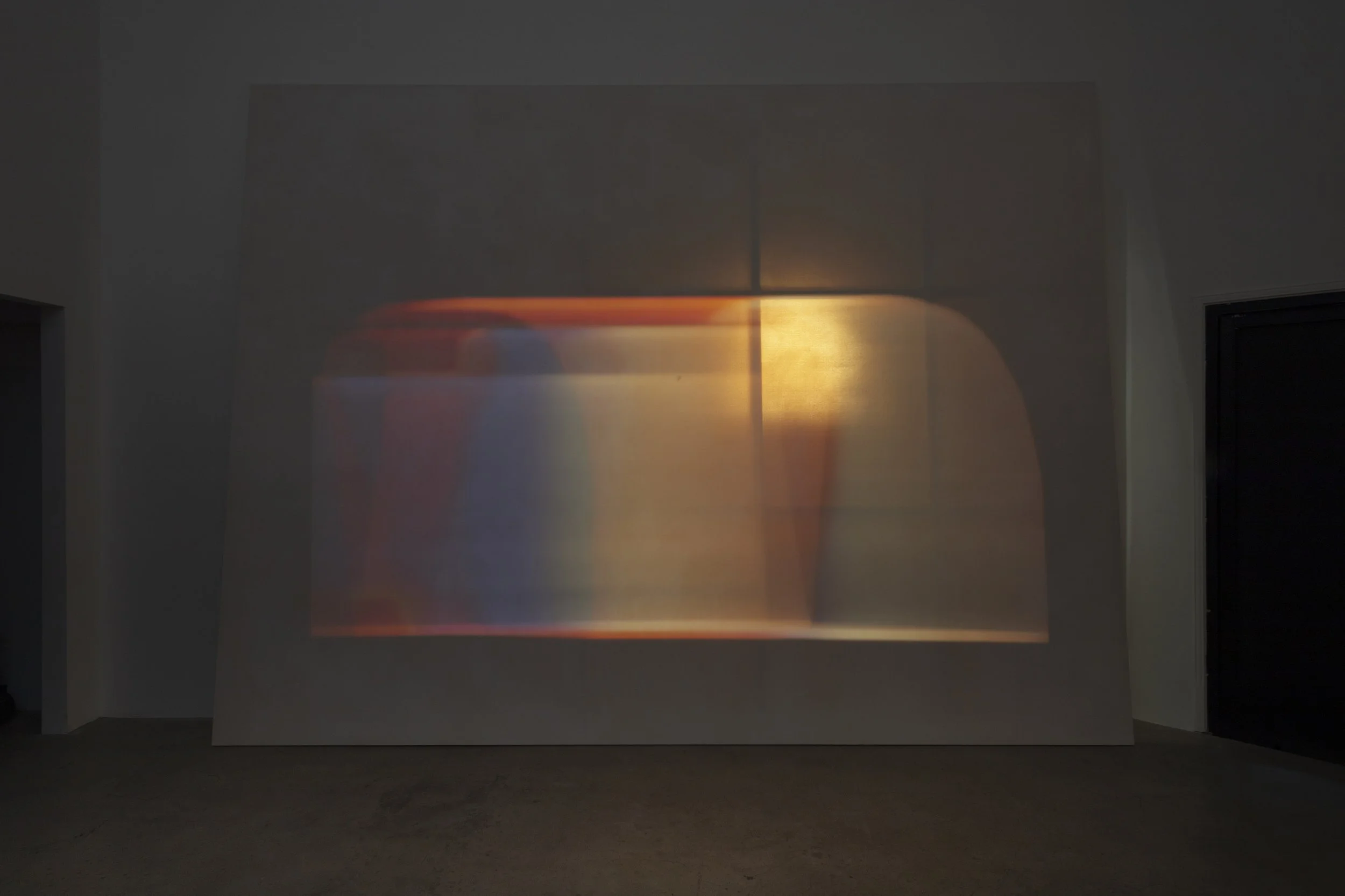
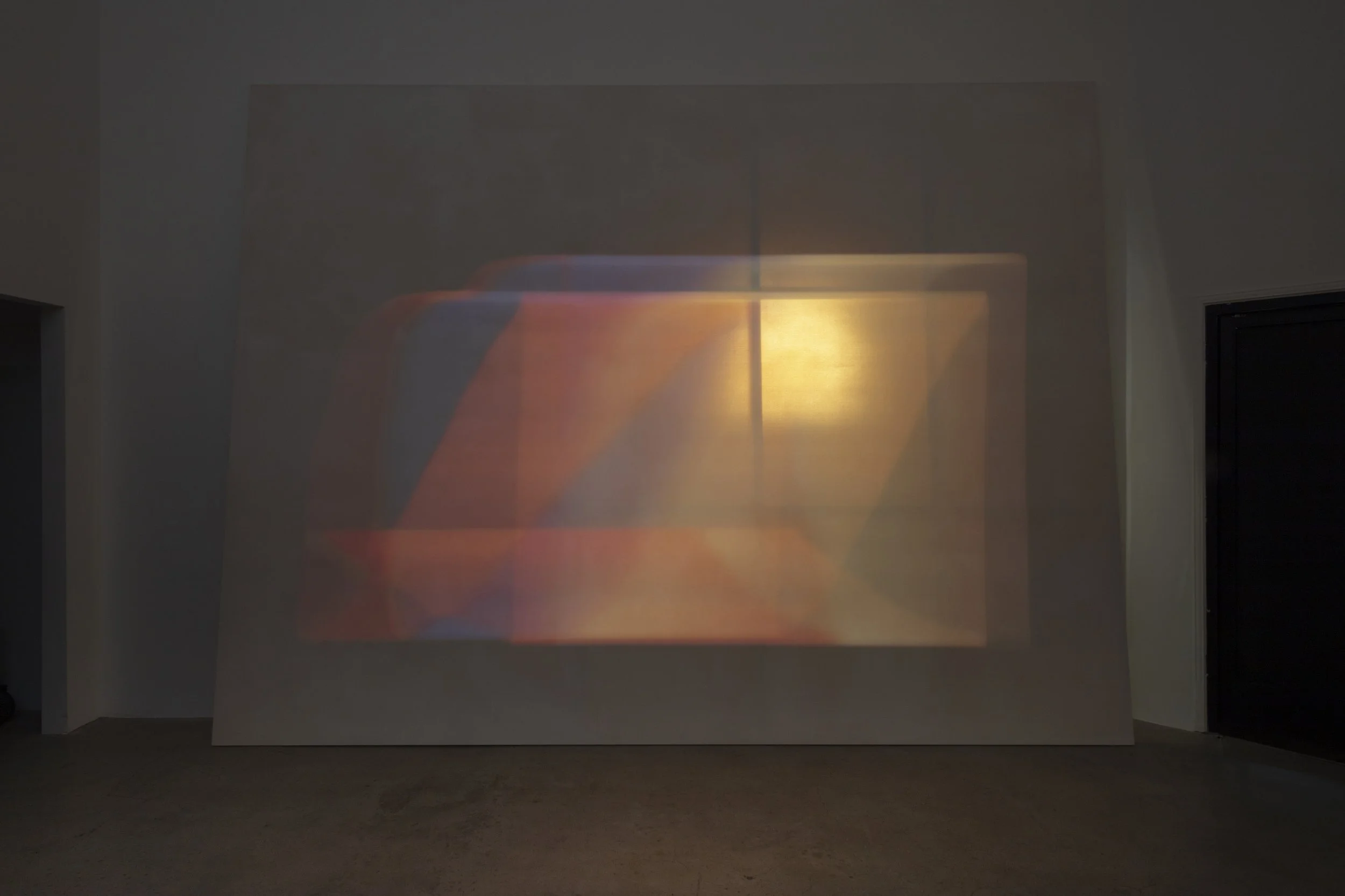
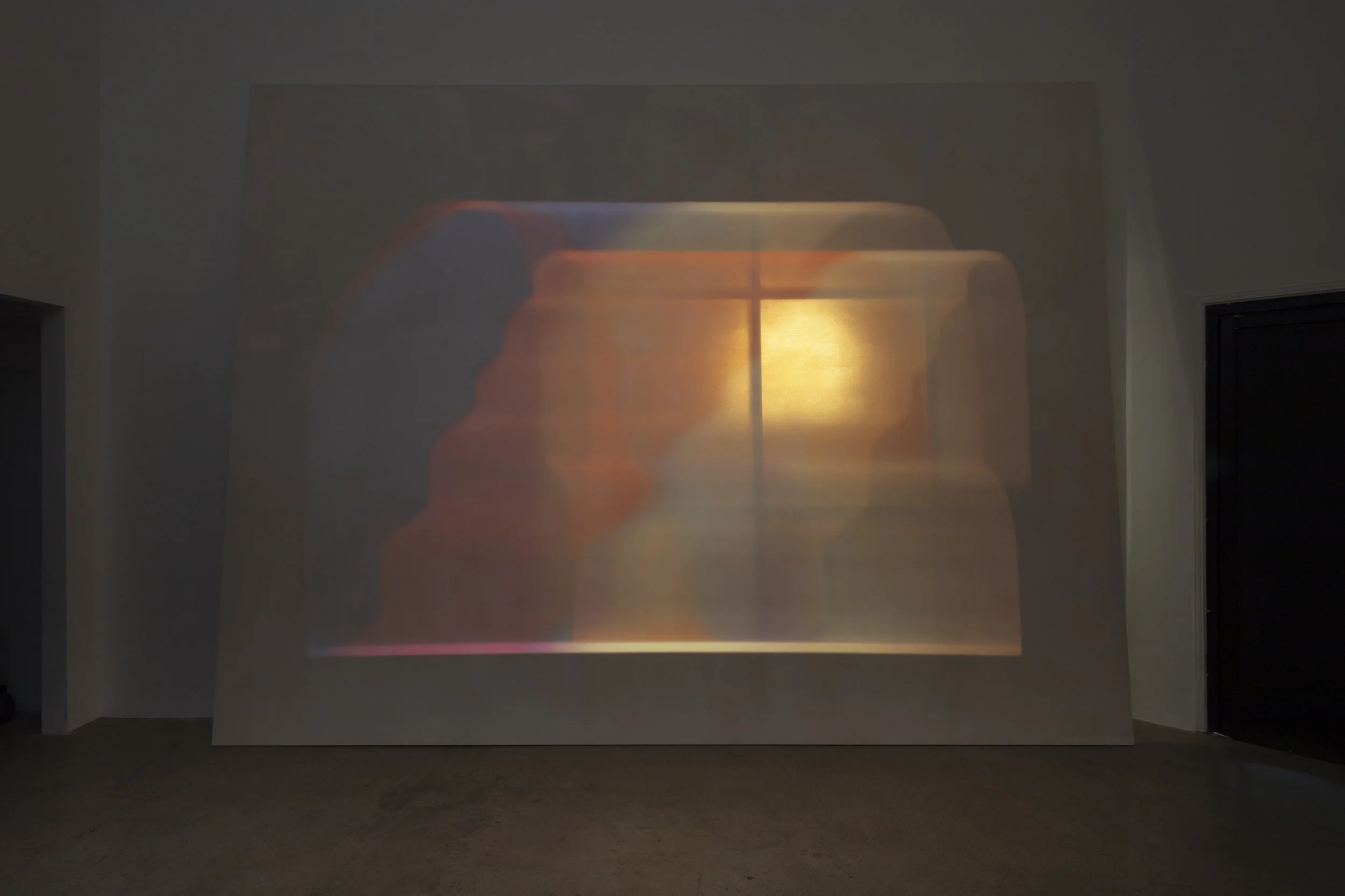
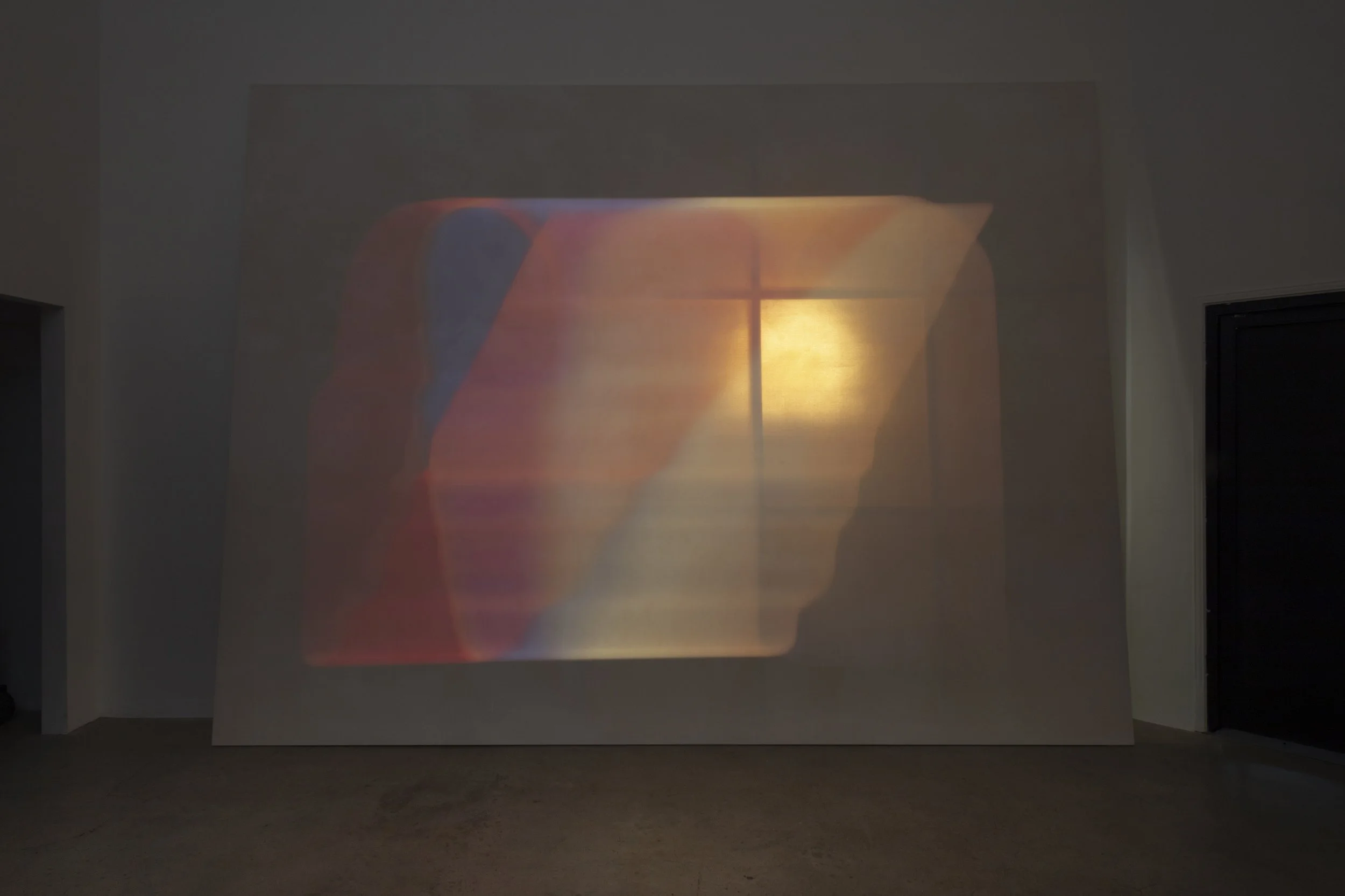
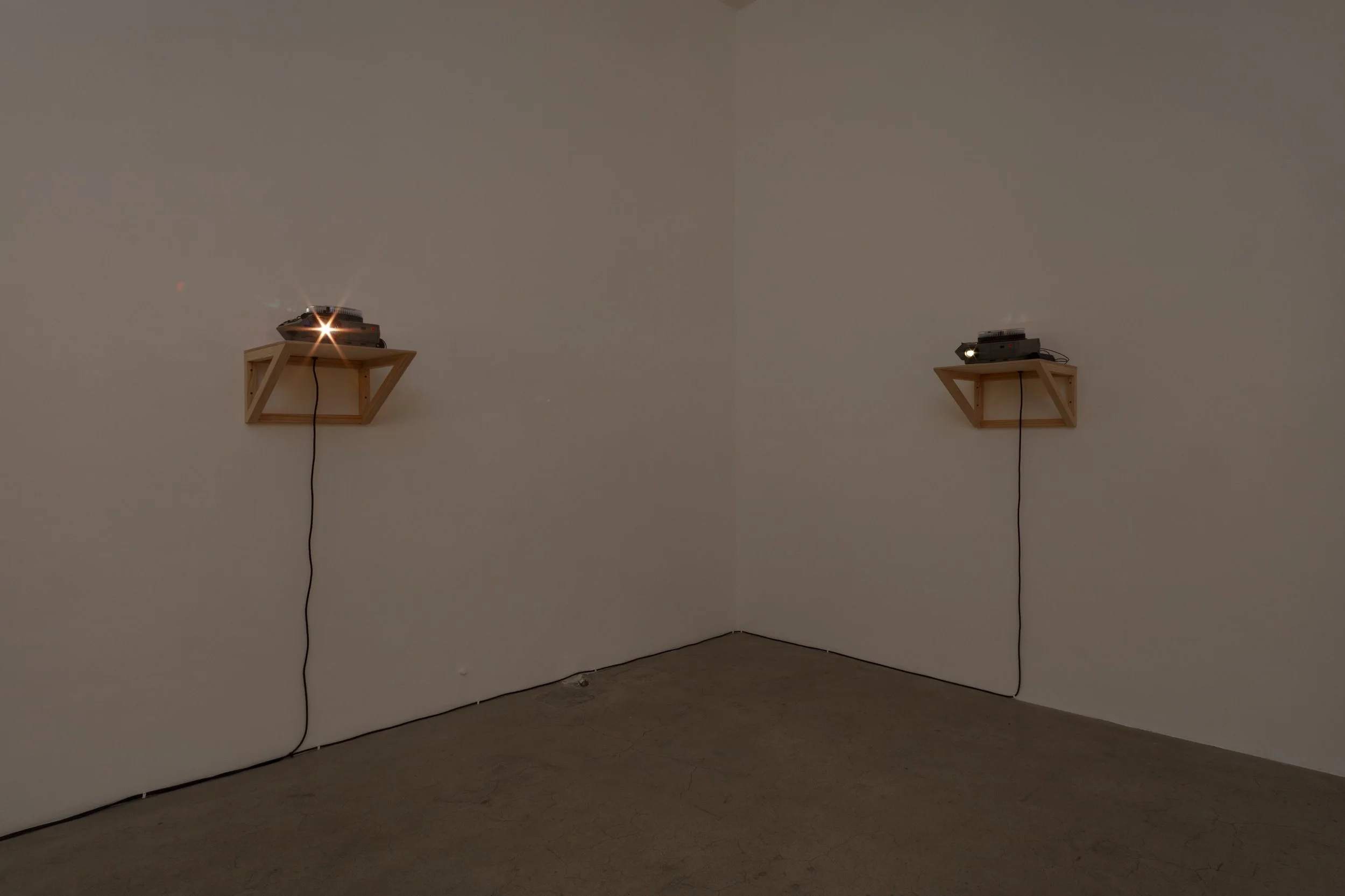
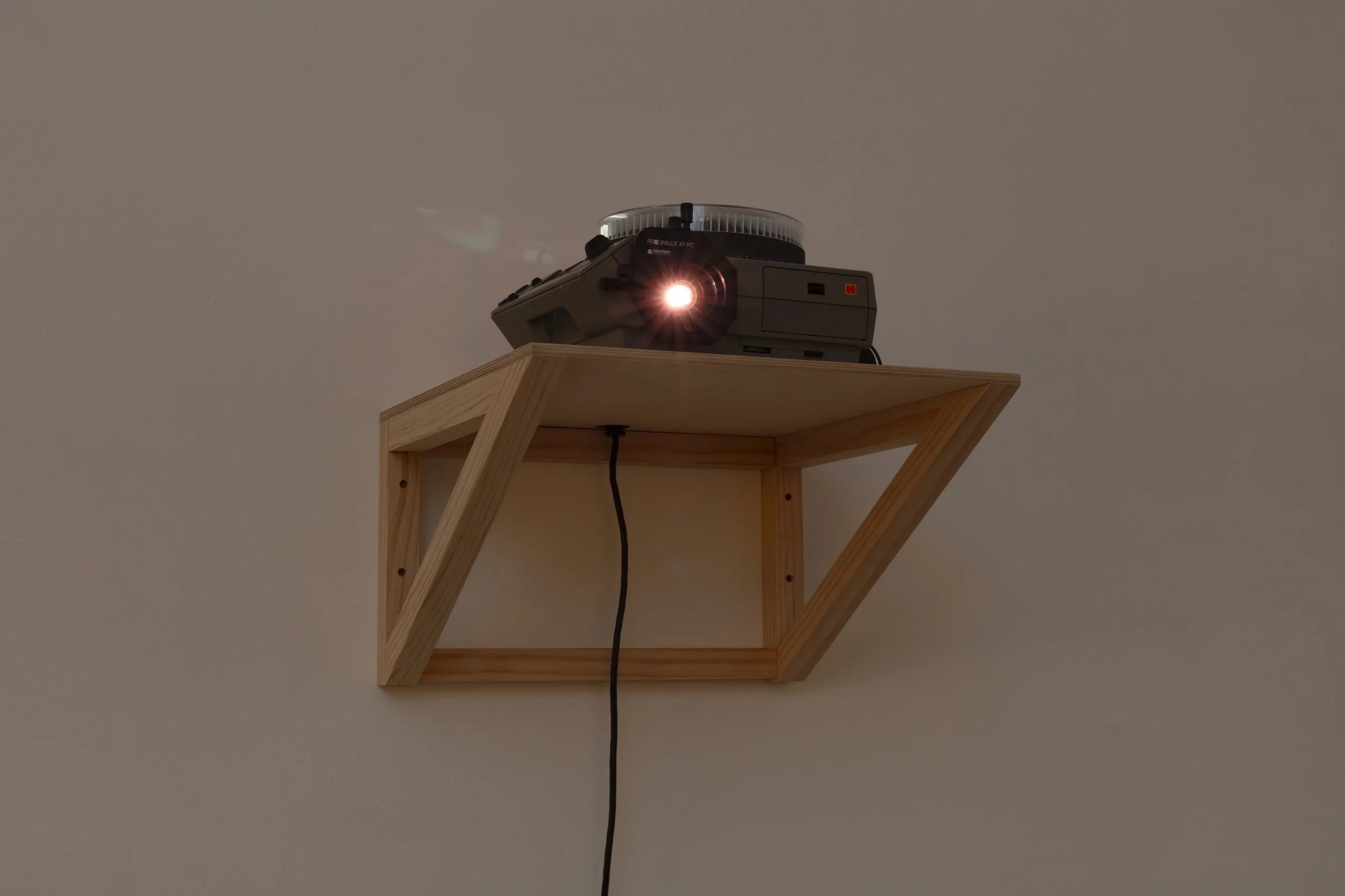
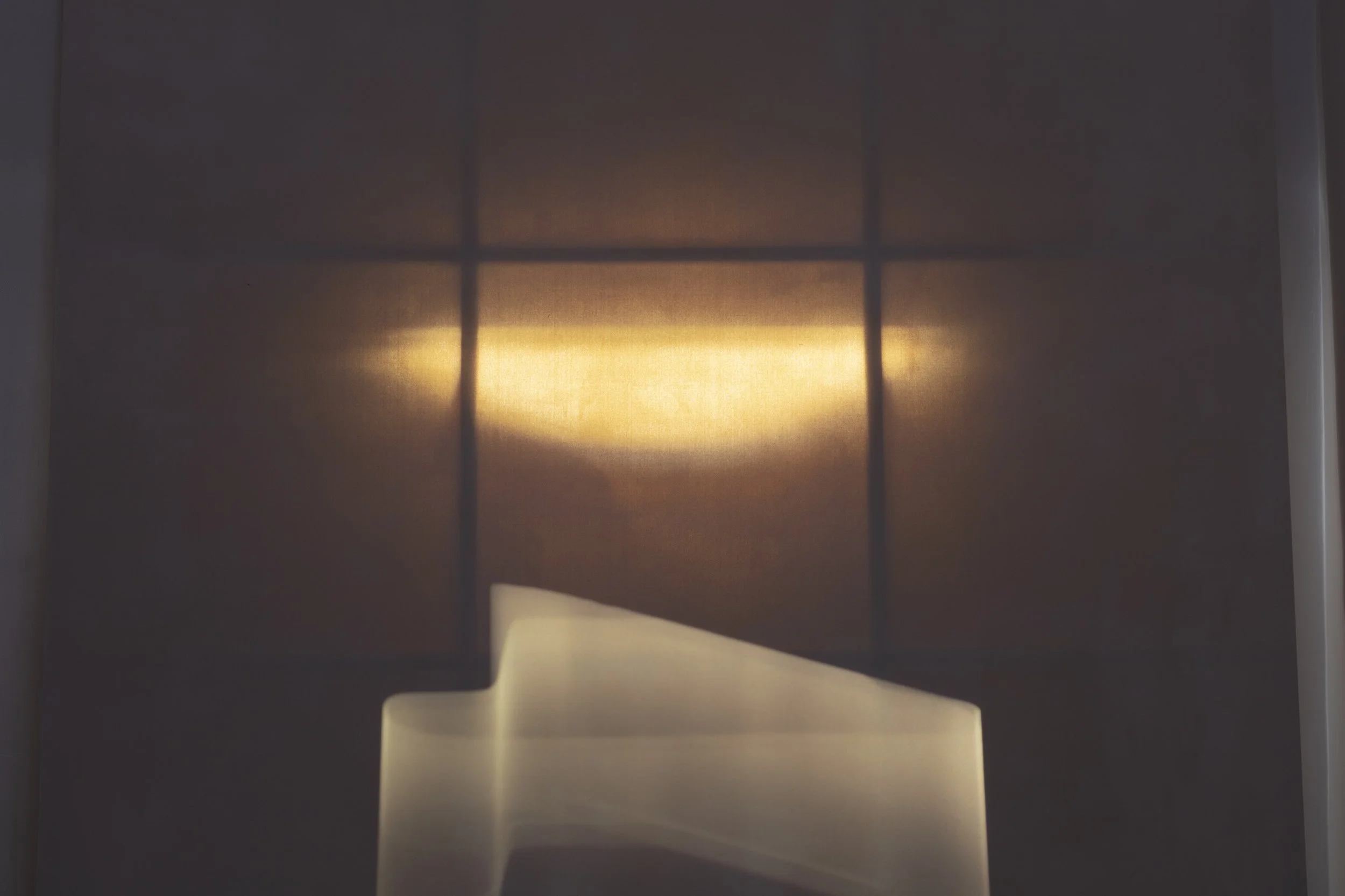
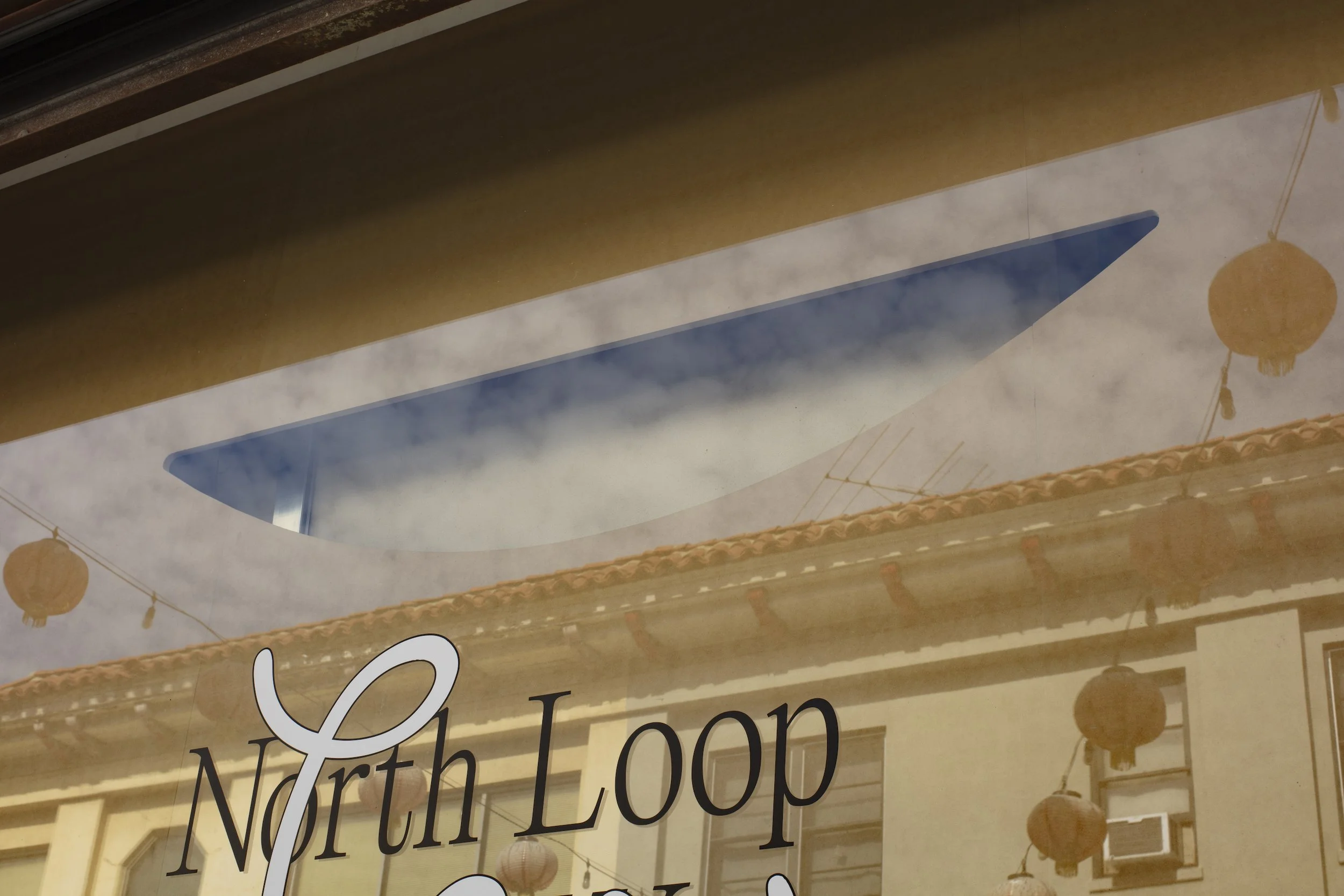
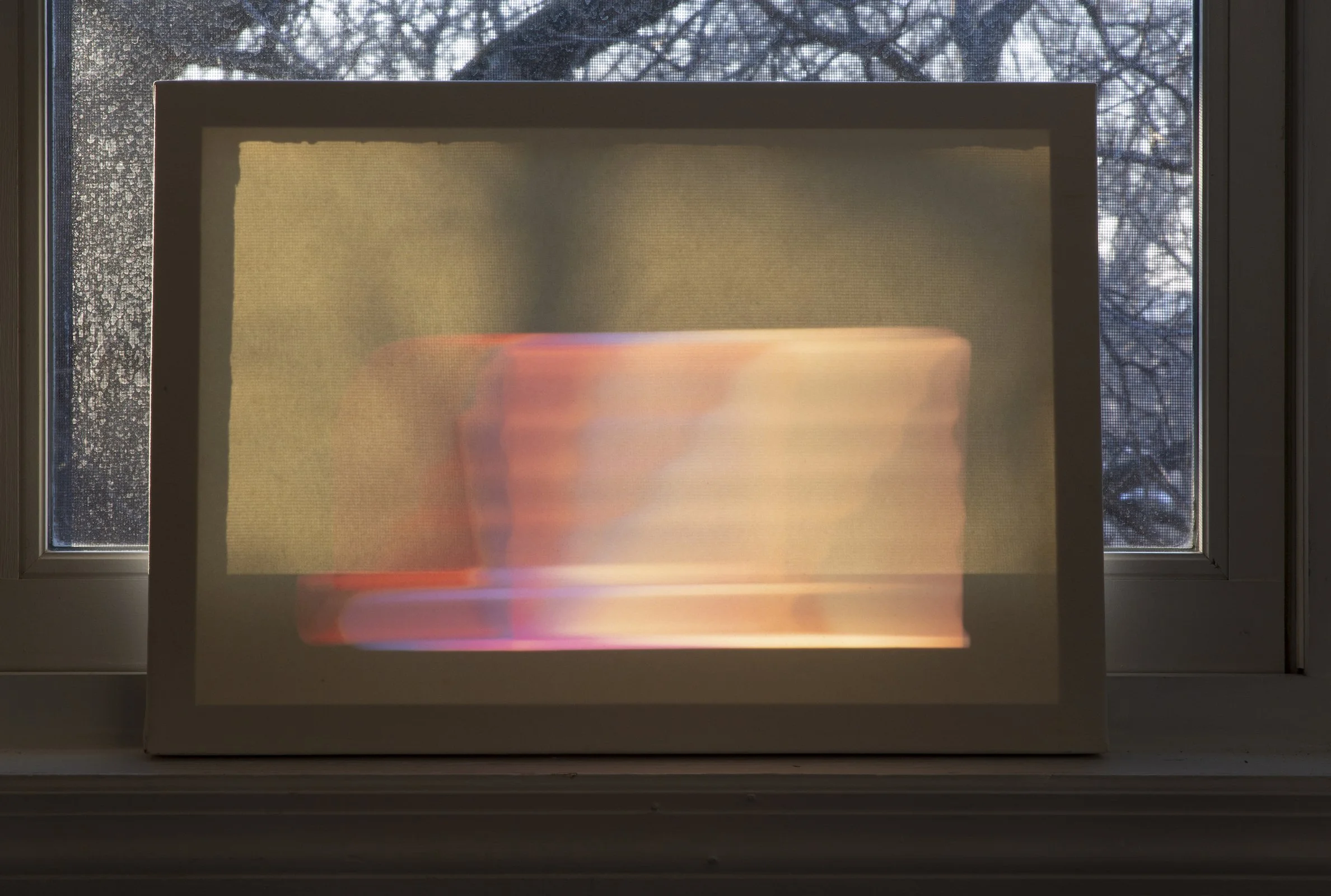
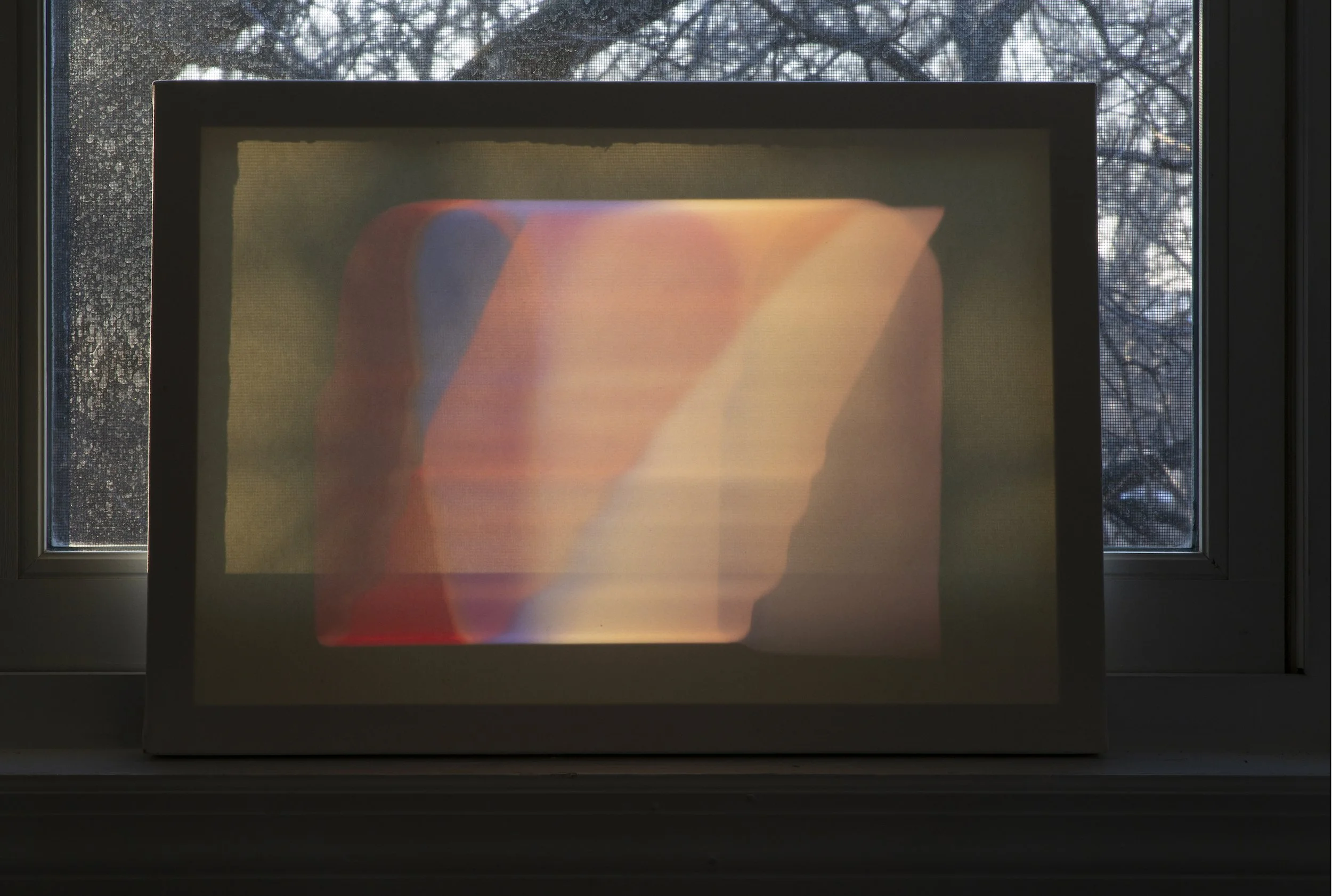
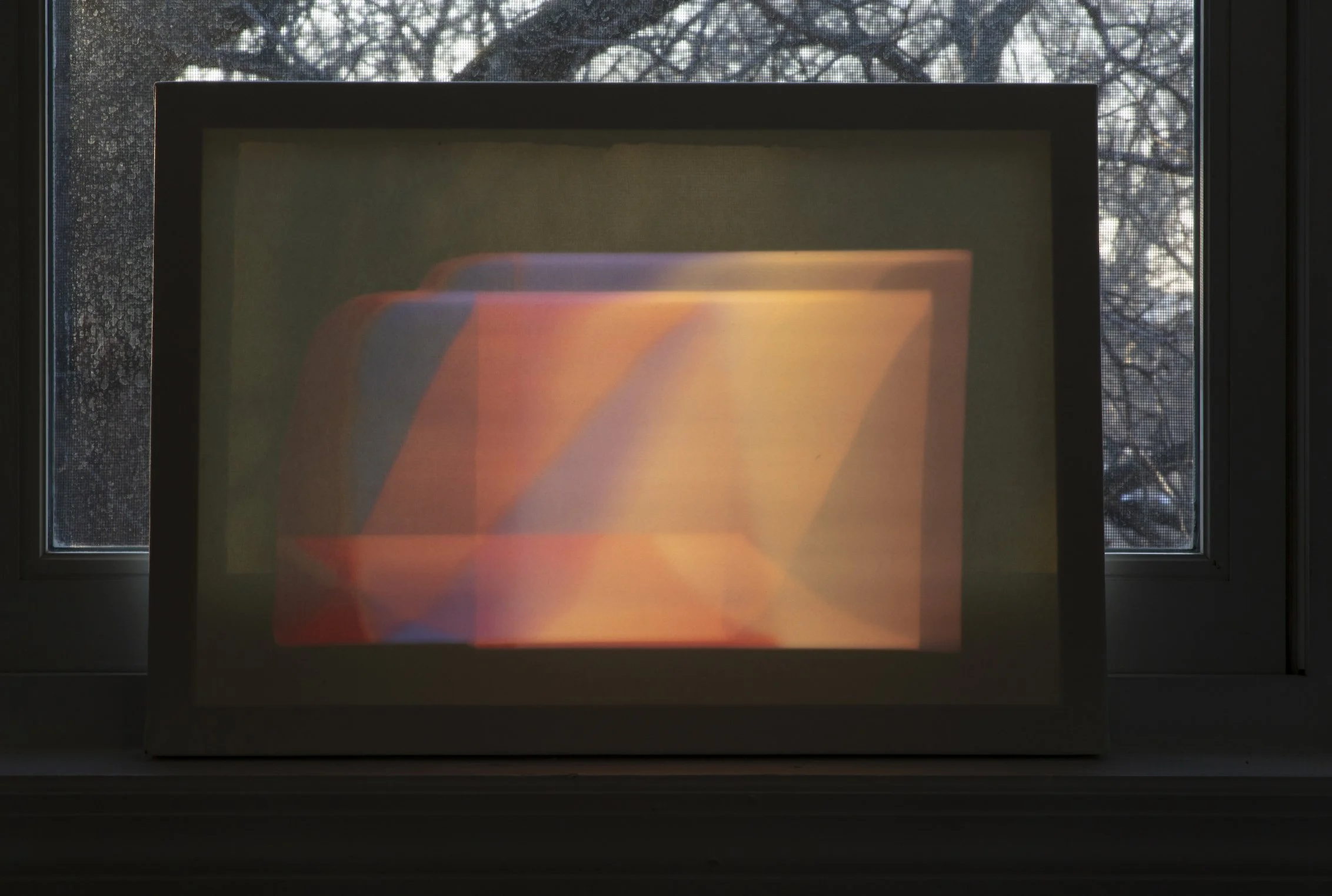
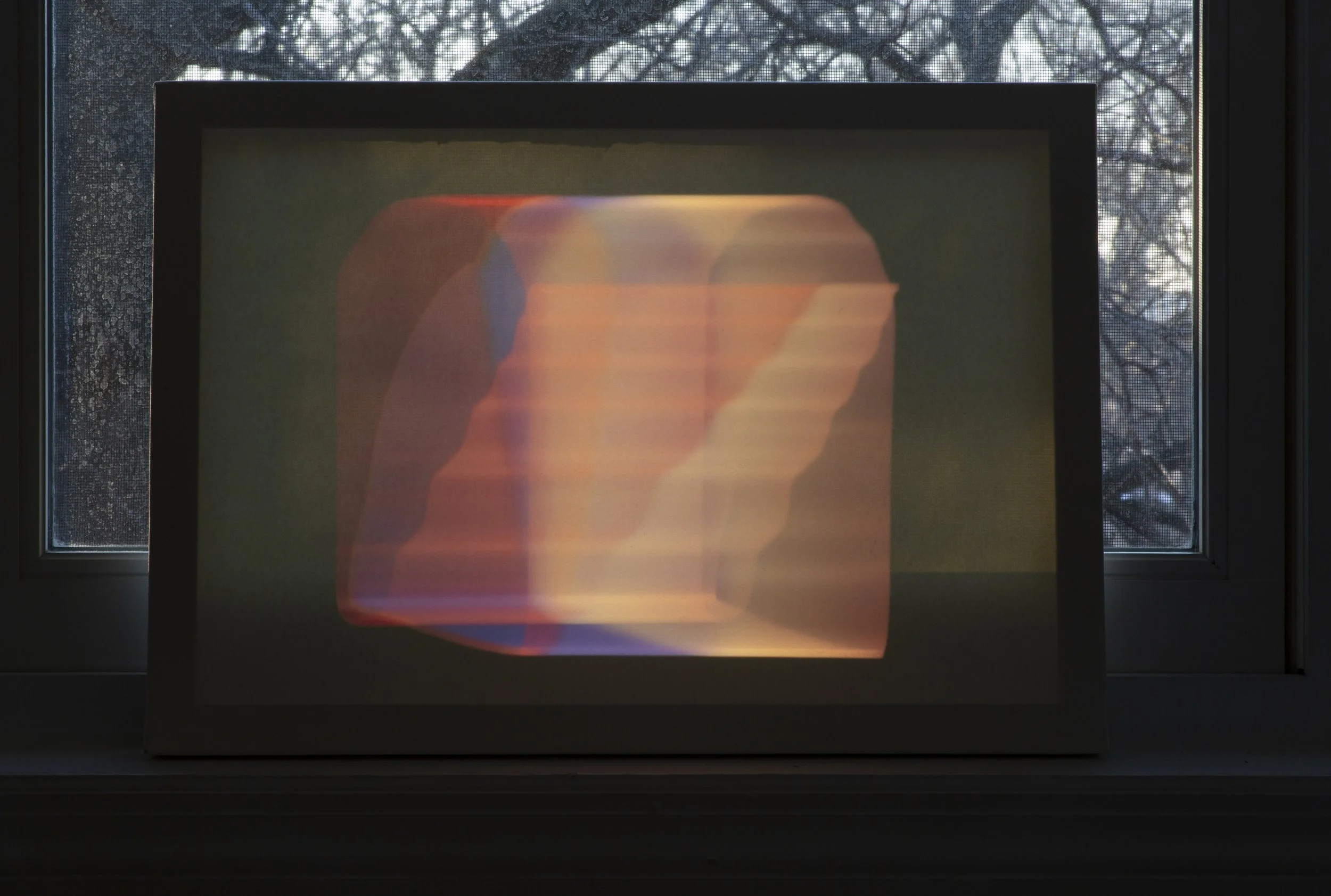
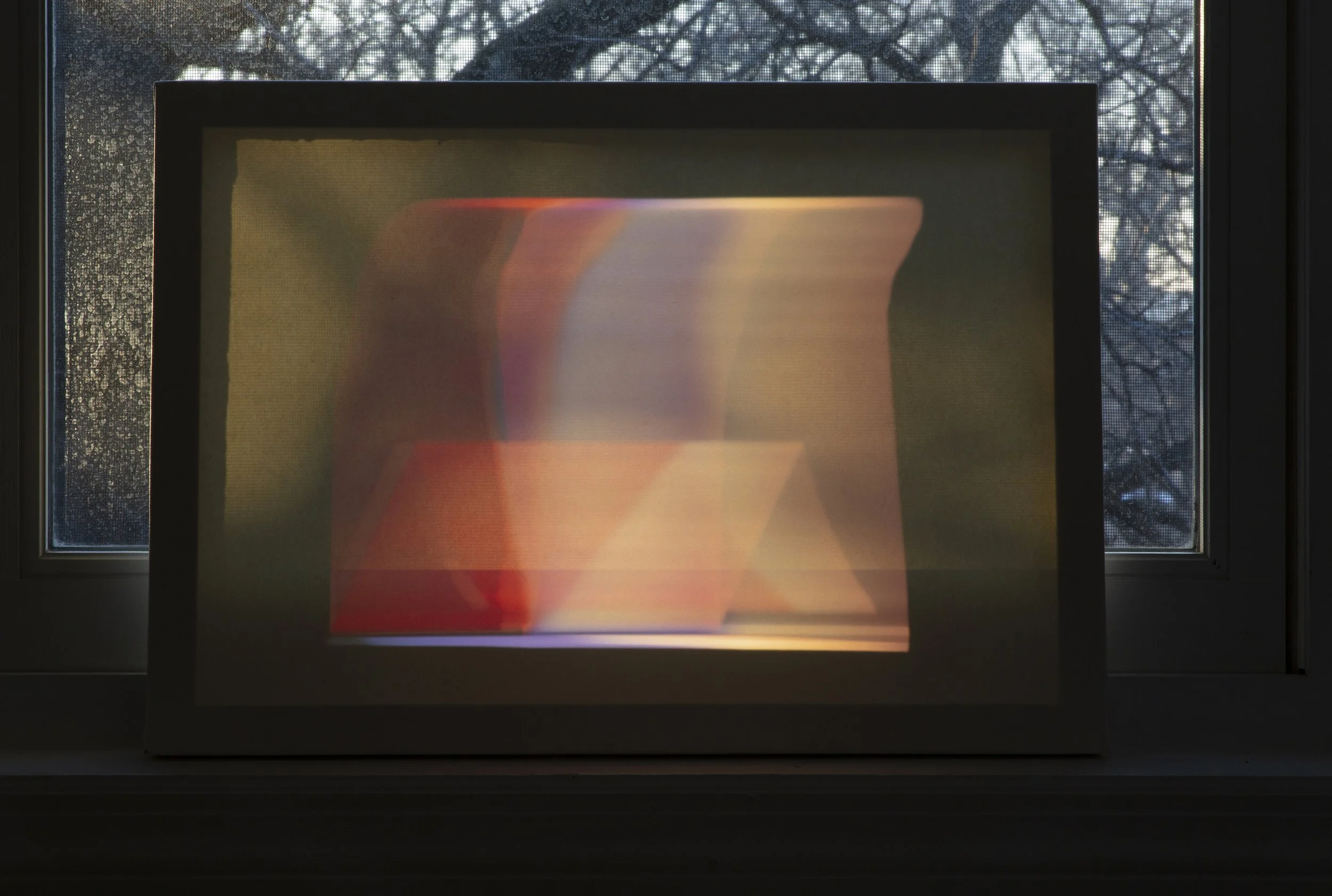
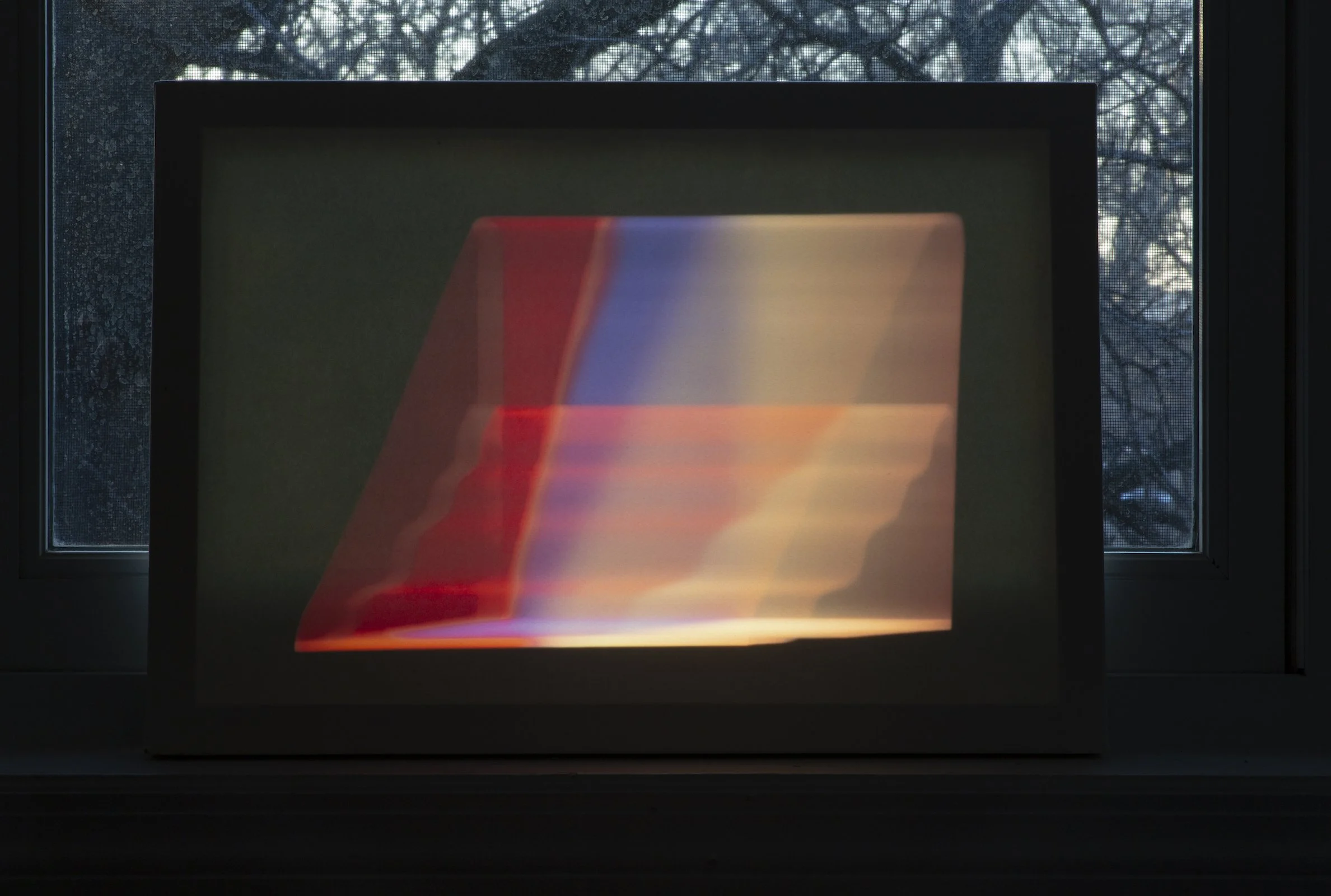
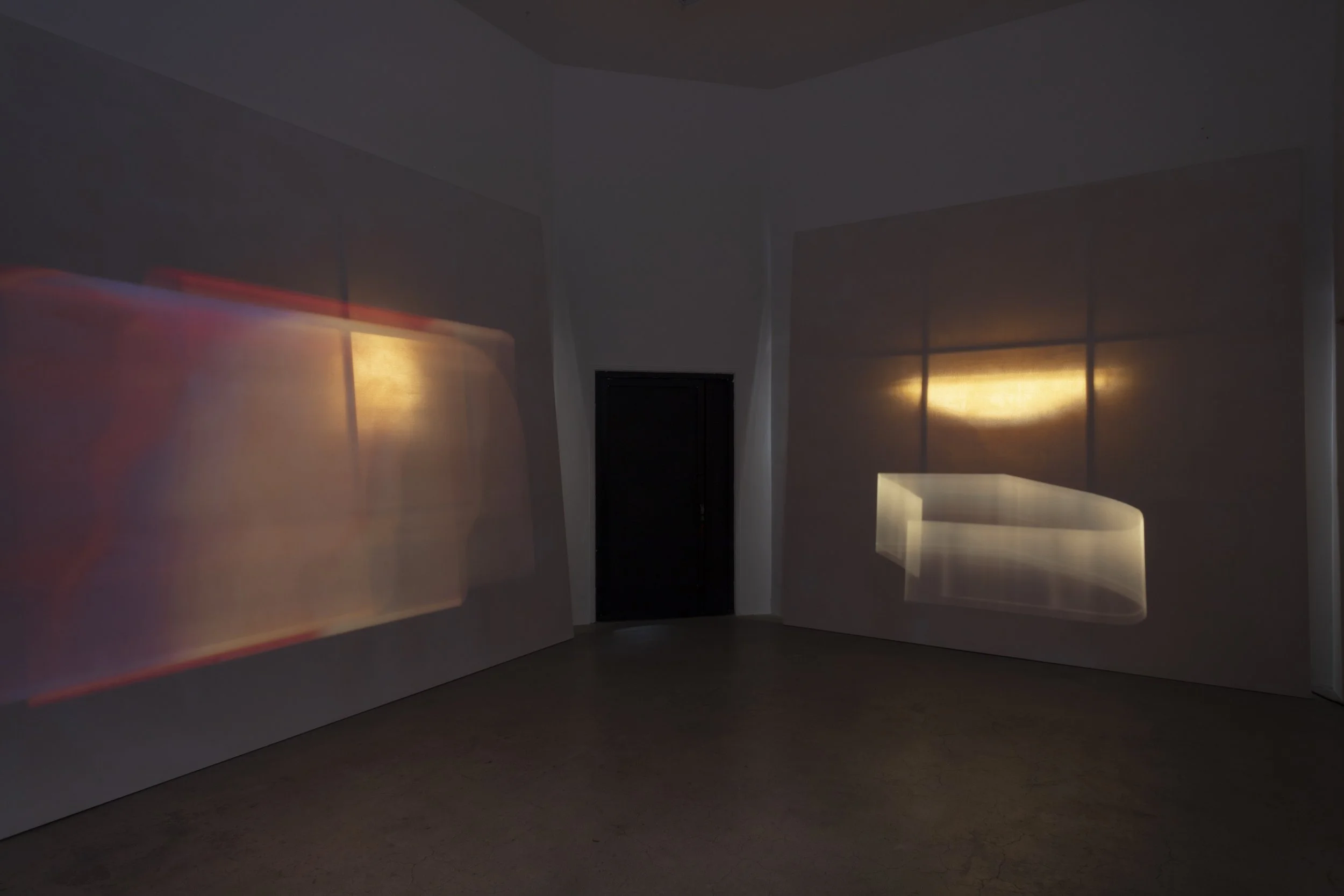
Only out an hour unfolds as a durational, immersive viewing experience grounded in stillness and gradual change. Two large canvases cover the gallery’s windows, darkening the space while allowing daylight to filter through from behind. Two 35mm slide carousels project soft, abstract forms onto the canvases, and shift at distinct temporal intervals: one advances every eight minutes and twenty seconds—the time light takes to reach Earth from the sun—while the other changes on the hour, a more familiar, human measure of time.
While the installation carries a quiet mechanical complexity—the duo’s name is borrowed from the terms “blinn” and “lambert,” commonly used shading effects in 3D modeling software— Only out an hour remains grounded in physical gesture. Each projected image is a drawing made over the course of thirty seconds. Working in the dark, the artists move a camera by hand over a digital image with an open shutter, drawing in space for the duration of the camera’s exposure. The resulting image is only revealed afterward, encountered together as an unplanned outcome. This direct, intimate, and collaborative process anchors the work, emphasizing touch, duration, and chance.
Blinn and Lambert, Only out an hour, 2026, 35mm slide projection, daylight, 100 minutes on loop, silent.
Though each slide is distinct, the images belong to a tightly defined visual language, characterized by a restrained color palette and softly folded forms. The cyclical nature of the work invites exacting looking—the viewer slowly perceives the forms morph with each analog click of the projector. Over time, the repetition heightens the viewer’s sensitivity to small shifts in form and tone, making perceptible the affective weight of incremental change. As the slides continue to cycle, the work favors sustained attention over resolution, situating the viewer within a slowed, open-ended experience of time.
Blinn and Lambert is a collaborative duo based in Brooklyn, NY, made up of two formally trained painters, Nicholas Steindorf and Kyle Williams, who have worked together for the past ten years in the relationship between painting, optical media, video, and animation. The artists met at Yale University where they received MFAs in Painting in 2014 and 2015 respectively. Steindorf received his BFA from Columbia College Chicago and Williams received a BA from Stanford University in 2004. Their work has been exhibited at The Campus Upstate (Claverack, NY), lowercavity (Holyoke, MA) Guest Gallery (Brooklyn, NY), Nathalie Karg Gallery, Below Grand (New York, NY), the American Academy of Arts and Letters in (New York, NY) and ArtSpace (New Haven, CT). They have been awarded residencies at the LIFT Film Studio Immersion Program in Toronto and the Institute for Electronic Arts at Alfred University in Alfred, NY.
Individual Artworks
-
![Blinn and Lambert, Only out an hour, 2026, 35mm slide projection, daylight, 100 minutes on loop, silent.]()
Blinn and Lambert, Only out an hour, 2026, 35mm slide projection, daylight, 100 minutes on loop, silent.
-
![Blinn and Lambert, Only out an hour, 2026, 35mm slide projection, daylight, 100 minutes on loop, silent.]()
Blinn and Lambert, Only out an hour, 2026, 35mm slide projection, daylight, 100 minutes on loop, silent.oes here
-
![Blinn and Lambert, Only out an hour, 2026, 35mm slide projection, daylight, 100 minutes on loop, silent.]()
Blinn and Lambert, Only out an hour, 2026, 35mm slide projection, daylight, 100 minutes on loop, silent.
-
![Blinn and Lambert, Only out an hour, 2026, 35mm slide projection, daylight, 100 minutes on loop, silent.]()
Blinn and Lambert, Only out an hour, 2026, 35mm slide projection, daylight, 100 minutes on loop, silent.
-
![Blinn and Lambert, Only out an hour, 2026, 35mm slide projection, daylight, 100 minutes on loop, silent.]()
Blinn and Lambert, Only out an hour, 2026, 35mm slide projection, daylight, 100 minutes on loop, silent.
-
![Blinn and Lambert, Only out an hour, 2026, 35mm slide projection, daylight, 100 minutes on loop, silent.]()
Blinn and Lambert, Only out an hour, 2026, 35mm slide projection, daylight, 100 minutes on loop, silent.
-
![Blinn and Lambert, Only out an hour, 2026, 35mm slide projection, daylight, 100 minutes on loop, silent.]()
Blinn and Lambert, Only out an hour, 2026, 35mm slide projection, daylight, 100 minutes on loop, silent.
-
![Blinn and Lambert, Only out an hour, 2026, 35mm slide projection, daylight, 100 minutes on loop, silent.]()
Blinn and Lambert, Only out an hour, 2026, 35mm slide projection, daylight, 100 minutes on loop, silent.
-
![Blinn and Lambert, Only out an hour, 2026, 35mm slide projection, daylight, 100 minutes on loop, silent.]()
Blinn and Lambert, Only out an hour, 2026, 35mm slide projection, daylight, 100 minutes on loop, silent.
-
![Blinn and Lambert, Only out an hour, 2026, 35mm slide projection, daylight, 100 minutes on loop, silent.]()
Blinn and Lambert, Only out an hour, 2026, 35mm slide projection, daylight, 100 minutes on loop, silent.
-
![Blinn and Lambert, Only out an hour, 2026, 35mm slide projection, daylight, 100 minutes on loop, silent.]()
Blinn and Lambert, Only out an hour, 2026, 35mm slide projection, daylight, 100 minutes on loop, silent.
-
![Blinn and Lambert, Only out an hour, 2026, 35mm slide projection, daylight, 100 minutes on loop, silent.]()
Blinn and Lambert, Only out an hour, 2026, 35mm slide projection, daylight, 100 minutes on loop, silent.
-
![]()
Exterior detail, Blinn and Lambert, Only out an hour, 2026, 35mm slide projection, daylight, 100 minutes on loop, silent.
-
![Blinn and Lambert, Only out an hour I, 2026, archival pigment print, edition of 3 + AP, 9 x 13 in.]()
Blinn and Lambert, Only out an hour I, 2026, archival pigment print, edition of 3 + AP, 9 x 13 in.
-
![Blinn and Lambert, Only out an hour II, 2026, archival pigment print, edition of 3 + AP, 9 x 13 in.]()
Blinn and Lambert, Only out an hour II, 2026, archival pigment print, edition of 3 + AP, 9 x 13 in.
-
![Blinn and Lambert, Only out an hour III, 2026, archival pigment print, edition of 3 + AP, 9 x 13 in.]()
Blinn and Lambert, Only out an hour III, 2026, archival pigment print, edition of 3 + AP, 9 x 13 in.
-
![Blinn and Lambert, Only out an hour IV, 2026, archival pigment print, edition of 3 + AP, 9 x 13 in.]()
Blinn and Lambert, Only out an hour IV, 2026, archival pigment print, edition of 3 + AP, 9 x 13 in.
-
![]()
Blinn and Lambert, Only out an hour V, 2026, archival pigment print, edition of 3 + AP, 9 x 13 in.
-
![Blinn and Lambert, Only out an hour VI, 2026, archival pigment print, edition of 3 + AP, 9 x 13 in.]()
Blinn and Lambert, Only out an hour VI, 2026, archival pigment print, edition of 3 + AP, 9 x 13 in.
-
![Blinn and Lambert, Only out an hour, 2026, 35mm slide projection, daylight, 100 minutes on loop, silent.]()
Blinn and Lambert, Only out an hour, 2026, 35mm slide projection, daylight, 100 minutes on loop, silent.